Posts

Showing posts with the label #Unit Condenser

How Wine Room Refrigeration Systems Protect Flavor, Value, and Investment
Image
For wine collectors, restaurateurs, and luxury homebuilders, maintaining ideal storage conditions is more than a preference—it’s a necessity. That’s where wine room refrigeration systems come in, offering the precision and control required to preserve the integrity, flavor, and value of every bottle. Wine is a living product. Its taste, texture, and aroma are highly sensitive to temperature, humidity, and air circulation. Even slight deviations can disrupt the aging process or cause irreversible spoilage. Craft Group’s expertly engineered systems provide consistent environmental control, tailored to the needs ofserious collectors, wine retailers, and upscale hospitality venues. Unlike traditional cooling units, wine room refrigeration systems are specifically designed to operate within the narrow temperature range optimal for wine storage—typically 55°F (13°C) with relative humidity around 60–70%. At Craft Group , our systems are built for long-term performance in these exact conditi...

Understanding What Is a Condensing Unit and Why It Powers Every Cooling System

Image
Whether you're running an HVAC system in a commercial building, managing industrial refrigeration, or operating a simple home air conditioner, you've likely come across the term “ condensing unit .” But exactly what is a condensing unit , and why is it so important in modern cooling systems? A condensing unit is the heart of any refrigeration or air conditioning system. Its primary role is to release heat from the refrigerant, allowing the cycle of cooling to continue. This unit houses three critical components: the compressor, the condenser coil, and the fan. Together, they compress the refrigerant, remove unwanted heat, and prepare it for the next cooling cycle. At Craft Group , we engineer and supply a variety of high-efficiency condensing units tailored for different commercial and industrial applications. Whether it's for HVAC, cold storage, or food production facilities, our systems are designed with long-term reliability and energy performance in mind. What makes ...

How your unit condenser keeps Your Home Air Fresh and Healthy

Image
  Have you ever walked into your house after being outside all day hoping for a cool, refreshing breeze only to find that it feels stuffy and stale? We all have these moments where we wonder what can be done so that throughout the day our homes consistently smell nice and inviting. The answer might surprise you: The unsung hero is often the condenser unit in your home. The Science Behind It All: Freshening Up Your Living Space With Science! But first things first- what happens when we say “freshening up your living space with science?” Well let’s take a look at how this works. If you want to know how anything works in your home that makes it always feel fresh then understanding what role condensing air plays is key; more specifically speaking about what role condensing THE outside air into THE house through appliances such as A/C units does. The very first step is quite simple actually–an outdoor unit condenses warmer interior atmospheres which are full of pollutants (dirt), and al...

Is a Chiller a Condensing Unit?

Image
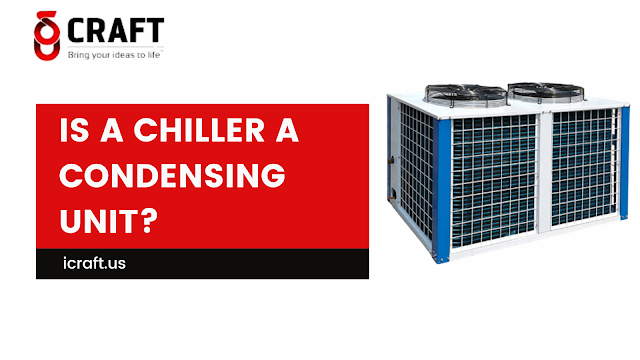
So, you are in the market looking for some cooling solutions and keep coming across these terms – chillers and condensing units. Naturally, you might be wondering, are they the same thing? Well, hop in as we dissect these terms in a way that’s as cool and refreshing as a breeze on a hot summer day. What’s in a Name? First off, understanding each component is crucial. And yeah, the terminology can be as tricky as getting that last bit of toothpaste out of the tube. Chillers : Think of chillers as the big bosses of cooling. They are like a cold heart, pumping chilled water or another coolant through a system to pull heat out of spaces or processes. They do this through a cycle involving evaporation, condensation, and compression. Condensing Units : On the flip side, the condenser is an outdoor component of your cooling system. It’s where the magic of condensation happens, turning refrigerant vapor back into liquid. The condensing unit houses the compressor, the condenser coil, and t...

Critical Function of Air Condenser Units in Air Conditioning Systems

Image
An integrated design solution is a comprehensive and holistic approach that unifies disciplines to address significant vital variables and factors for effective decision-making. For air conditioning systems, it becomes paramount to use collaborative technologies and approaches to foster cooperation between experts from different sectors. Its function in every designing phase brings the platform for exports to collaborate and work seamlessly, applying center design principles and the methodology primarily used in design and management frameworks. It also improves the integrated method. This methodology has the potential that the human perspective is one of the incorporated factors at every level of the problem-solving procedure, leading to effective and user-centric solutions. Hence, this integrated design philosophy is essential for air conditioning systems to optimize air condenser units’ performance and overall efficiency. How Does the Water-Cooled Condensing Unit Work? Water-cooled ...

Air Condenser Units: How They Work and Why They're Important?

Image
  An air condenser unit (ACU) is a crucial component of any heating, ventilation, and air conditioning (HVAC) system. It works alongside an evaporator and a compressor to complete the refrigeration cycle, which helps regulate the temperature inside a building. But what exactly is an air condenser unit and how does it work? In this article, we'll delve into the inner workings of ACUs and explore the benefits they offer.   How Air Condenser Units Work First off, it's important to understand the refrigeration cycle. This is the process that occurs when a substance, like refrigerant, is used to transfer heat from one place to another. In an HVAC system, the refrigerant is first compressed by the compressor, causing it to become hot and high pressure. It is then sent to the air condenser unit, where it releases the heat, it has absorbed and cools down. The cooled refrigerant is then sent to the evaporator, where it absorbs heat from the air inside the building and...